The RTX 5060 is the default budget GPU of 2026 — the card in every sub-$1,100 prebuilt, the one your cart suggests, the one thousands of first-time builders settle on every month. It launched May 2025 at $299 and earned that popularity honestly: it’s a genuinely good 1080p card. It also carries an 8GB asterisk that gets bigger every quarter, and a street price that’s drifted well above sticker. Here’s the whole picture.
RTX 5060 specs and pricing
| Spec | RTX 5060 |
|---|---|
| VRAM | 8GB GDDR7 |
| MSRP | $299 (launched May 19, 2025) |
| Street price (July 2026) | ~$350–$370 typical; ~$350 if you shop patiently |
| Raster vs RTX 4060 | ~22% faster |
| Upscaling | DLSS 4 with multi-frame generation |
| Power | Modest; runs fine on 500–600W prebuilt PSUs, needs PCIe power cable |
The gap between MSRP and street price is the AI story: datacenter demand for anything with GDDR is squeezing consumer supply, which we tracked in buy a GPU now or wait it out? and which is half the reason $300 became the new $200. Never pay the $370 midpoint without checking a price tracker first — $350 units surface weekly.
Performance: what the numbers actually look like
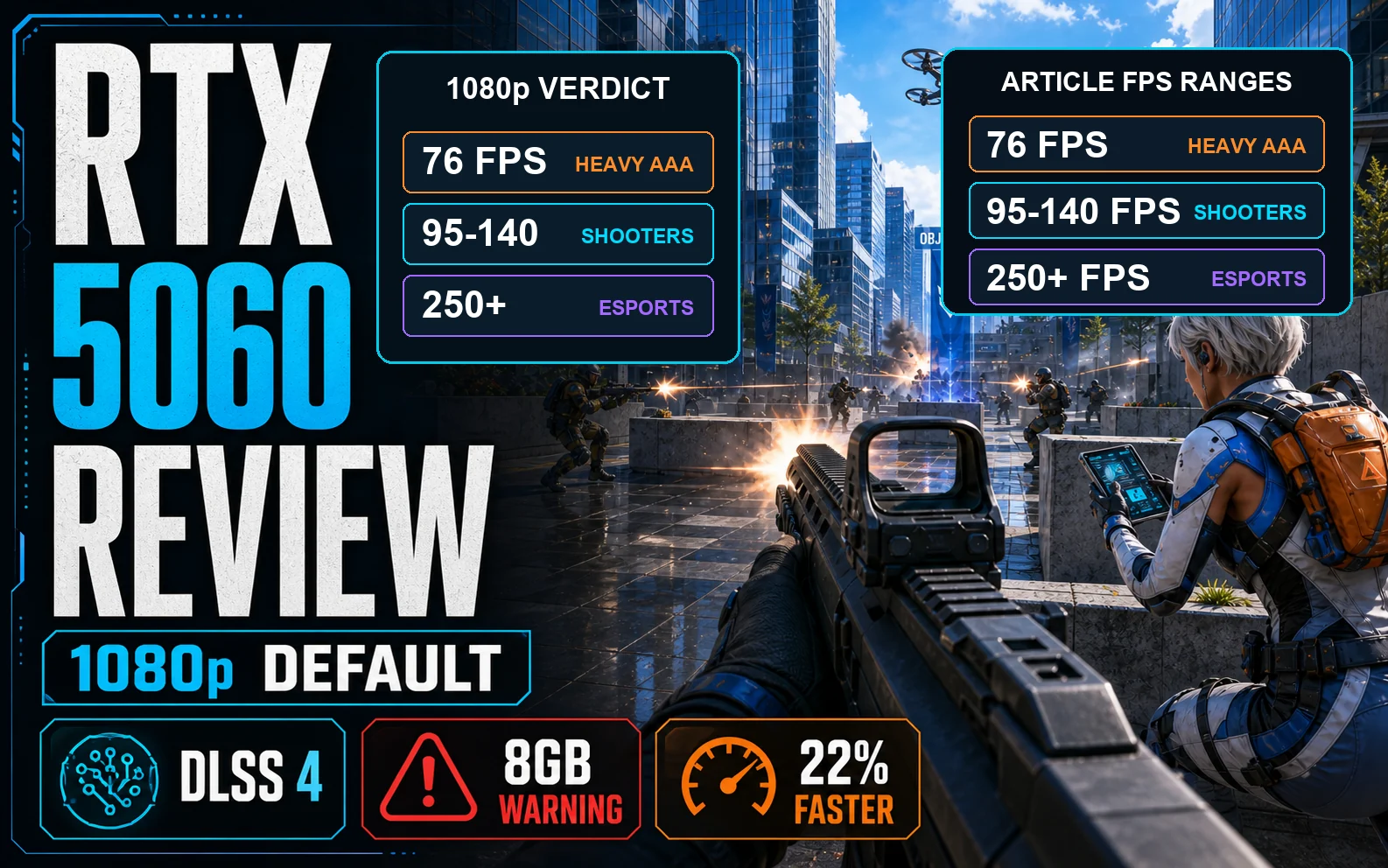
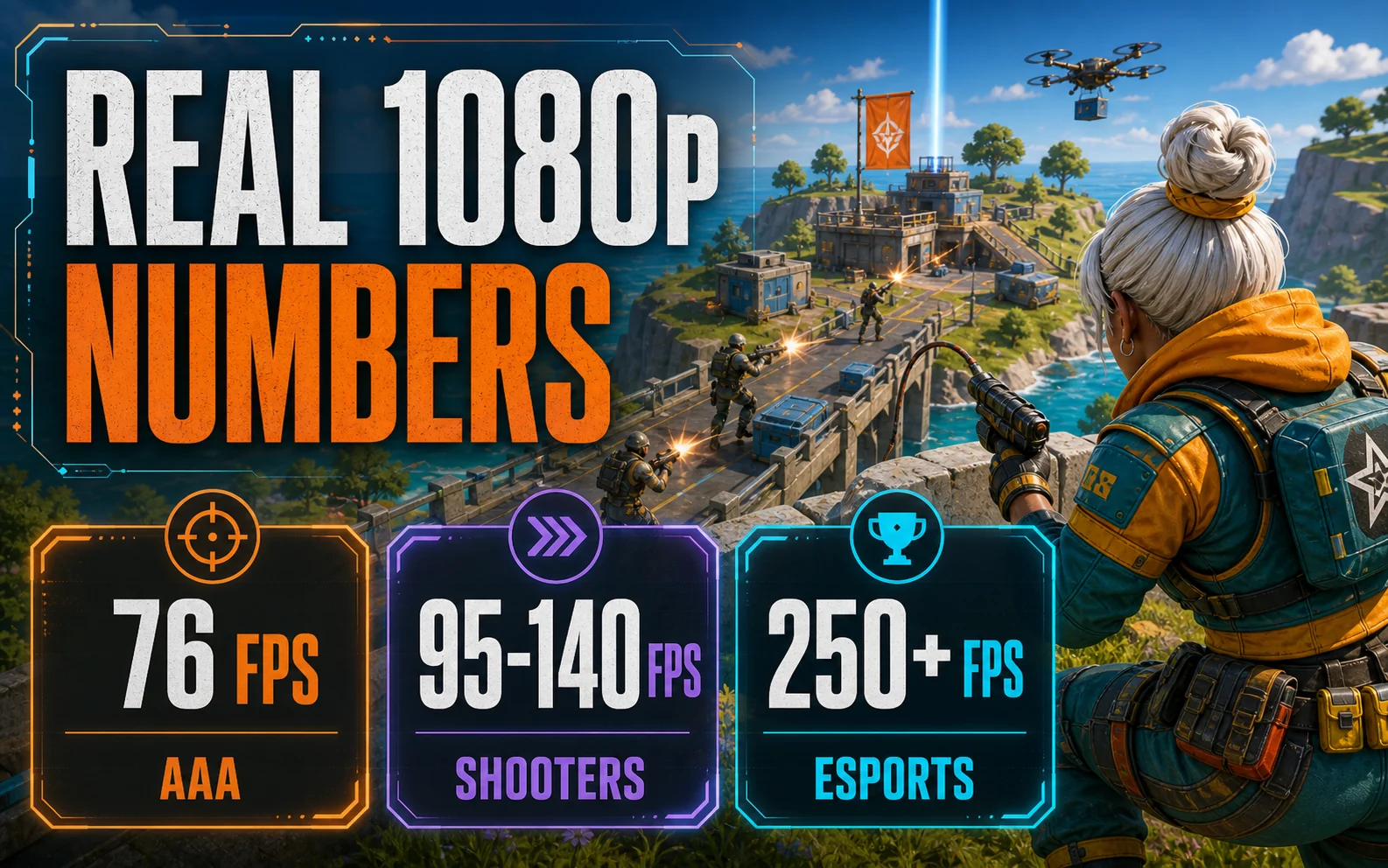
Independent testing puts the 5060 exactly where a budget buyer wants it at 1080p. In heavy modern AAA, expect the mid-70s: GamersNexus measured 76fps average with 60–62fps lows in demanding titles. In competitive shooters — Helldivers 2, Warzone — published results run 95–140fps. And in esports proper, it’s not close: 250+ fps in Fortnite Performance Mode, which is why it anchors the settings targets in our Fortnite and CS2 tuning guides.
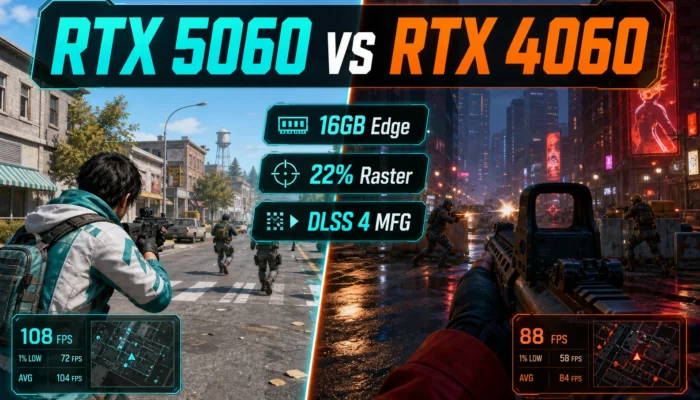
At 1440p with quality-mode upscaling, 90–110fps is achievable in optimized titles — the 5060 is a better 1440p card than its predecessor ever was, right up until VRAM says otherwise (next section). The generational jump over the 4060 is ~22% in raster with DLSS 4’s multi-frame generation on top; whether that justifies an upgrade from a 4060 is a different question, and our answer is in RTX 5060 vs RTX 4060 (mostly: no — this card is for people upgrading from further back).
The 8GB problem, quantified
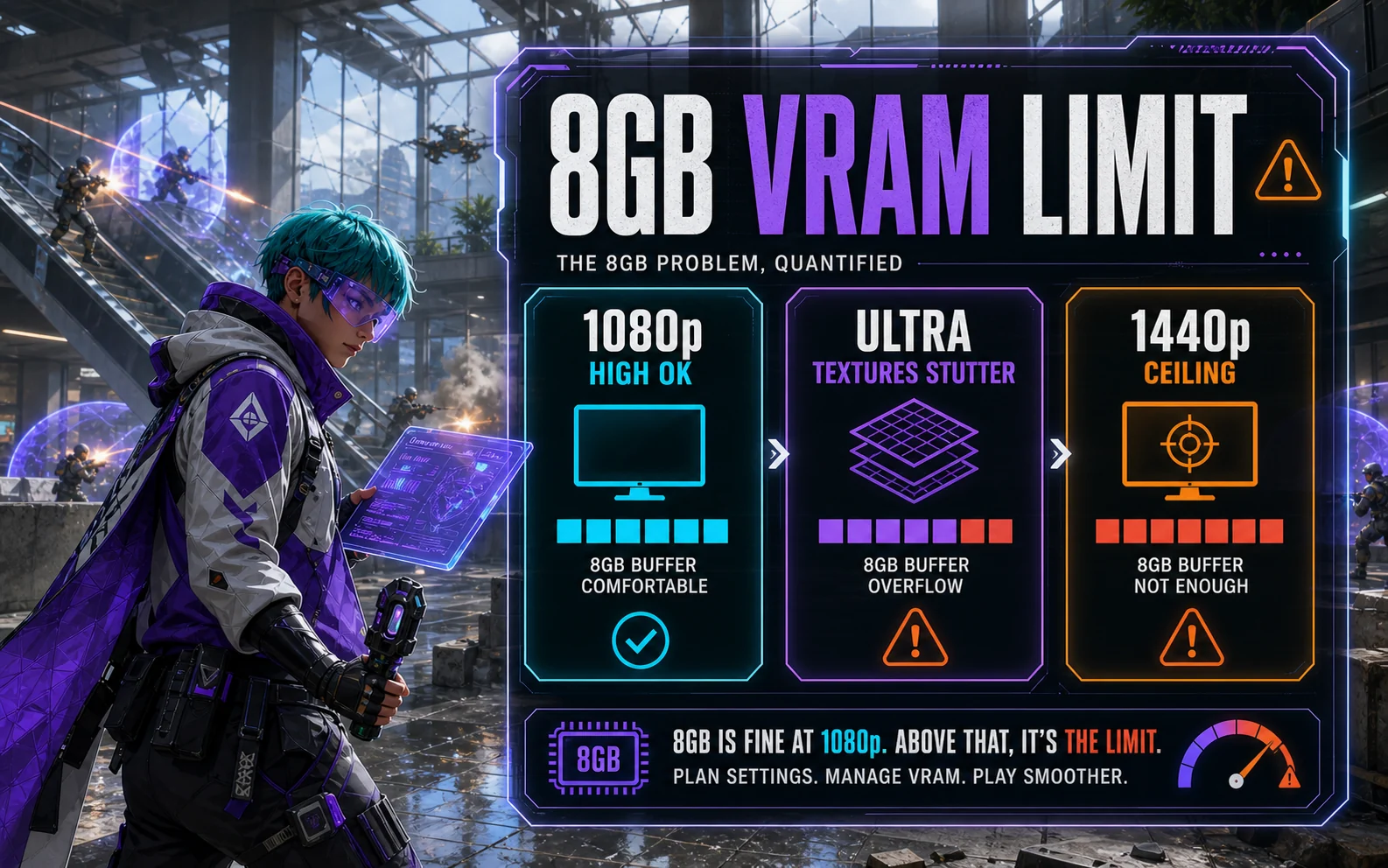
8GB of VRAM was comfortable in 2023, adequate in 2024, and is the floor in 2026. What that means concretely: at 1080p medium-to-high, nothing bad happens — the card is well matched to its buffer. At 1080p ultra with ray tracing or high-resolution texture packs, new releases already spill past 8GB and stutter until you dial textures back. At 1440p, VRAM is the ceiling before the GPU core is.
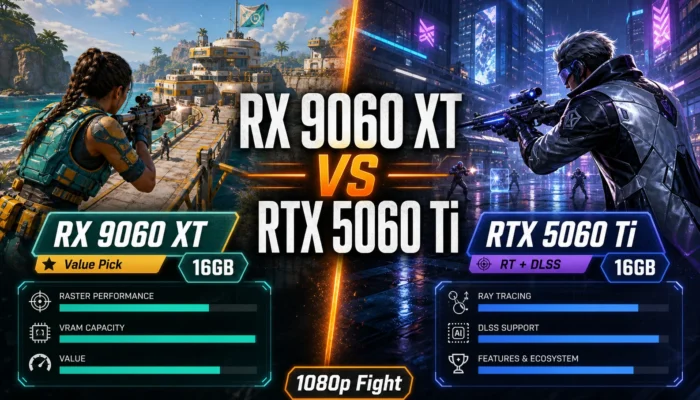
Our per-game guides work around this constantly — the texture-setting advice in Cyberpunk and Monster Hunter Wilds exists largely because of 8GB cards. If you keep GPUs four-plus years, that constraint compounds: the 16GB RX 9060 XT is ~10% faster today and will be far more than 10% better in 2029. Nvidia’s own answer is the 5060 Ti 16GB at a $400+ street price.
Who should buy the RTX 5060
Buy it if: you play at 1080p and want it to just work; you’re buying a prebuilt (it’s the card in the CyberPowerPC Gamer Xtreme and most of our under-$1,000 prebuilt picks, where builders’ locked component contracts make it effectively cheaper than DIY — see why prebuilts are beating DIY); or DLSS 4 and Nvidia’s driver ecosystem matter to you.
Skip it if: you’re targeting 1440p or a 4+ year lifespan (get 16GB — the 9060 XT); your machine is an SFF office box (the 5060 needs a PCIe power cable; the refurb play requires slot-powered cards); or your current card is a 4060/3060 Ti — the uplift won’t feel like $350. Also worth knowing: the relaunched RTX 3060 12GB undercuts it hard for pure esports duty.
Verdict
A safe, sensible, slightly overpriced 1080p card — the budget default for defensible reasons. At its $299 MSRP it would be an easy recommendation; at $350–370 street it wins on availability and ecosystem rather than value, and loses the pure frames-per-dollar fight to the RX 9060 XT 16GB. Fine choice today, especially in a prebuilt. Just buy it knowing the 8GB clock is ticking.
FAQ
Is the RTX 5060 good in 2026?
Yes, for 1080p: independent testing shows ~76fps in heavy AAA titles, 95–140fps in competitive shooters, and 250+ fps in Fortnite Performance Mode. Its 8GB VRAM is the main limit — fine at 1080p medium-to-high, tight at ultra textures and 1440p.
How much does the RTX 5060 cost right now?
MSRP is $299, but AI-driven memory demand has pushed street pricing to roughly $350–$370 as of July 2026, with patient shoppers finding ~$350. In prebuilts it’s often effectively cheaper than buying the bare card.
RTX 5060 or RX 9060 XT?
The RX 9060 XT 16GB is typically ~10% faster at 1080p, up to 22% at 1440p, with double the VRAM — the better long-term buy. The 5060 counters with DLSS 4, wider prebuilt availability, and Nvidia’s ecosystem.
Is 8GB of VRAM enough on the RTX 5060?
At 1080p medium-to-high, yes for now. New releases already exceed 8GB at 1080p ultra with ray tracing or texture packs, and the constraint tightens every year of the card’s life.