For twenty years the answer was automatic: building it yourself saves money. In 2026 that math broke, and it broke in a way nobody enjoys.
A 32GB DDR5 kit that ran about $95 last summer now sits north of $550. A 1TB NVMe drive roughly doubled. So when you price out an all-new budget build today, two of the cheapest parts on the list quietly became two of the most painful. That is the whole reason the best budget gaming prebuilt under 1000 2026 can hand you — something with an RTX 5060 or RX 9060 XT and 16GB of RAM — is suddenly a serious buy and not a compromise.
Why the cheap part of a build got expensive
Memory and storage used to be the easy line items. You picked a sensible kit, grabbed a 1TB SSD, and moved on. Now they can eat $300 of a $1,000 budget by themselves.
The cause is boring and stubborn. AI and datacenter demand pulled DRAM and NAND capacity toward high-margin parts, and the shortage is expected to drag into late 2027. Our guide on how to buy RAM and SSDs in 2026 without getting robbed spells out the buying side, but it nets out grim: 16GB is the sane target this year, 32GB is a luxury, and any RAM you already own is basically free money.
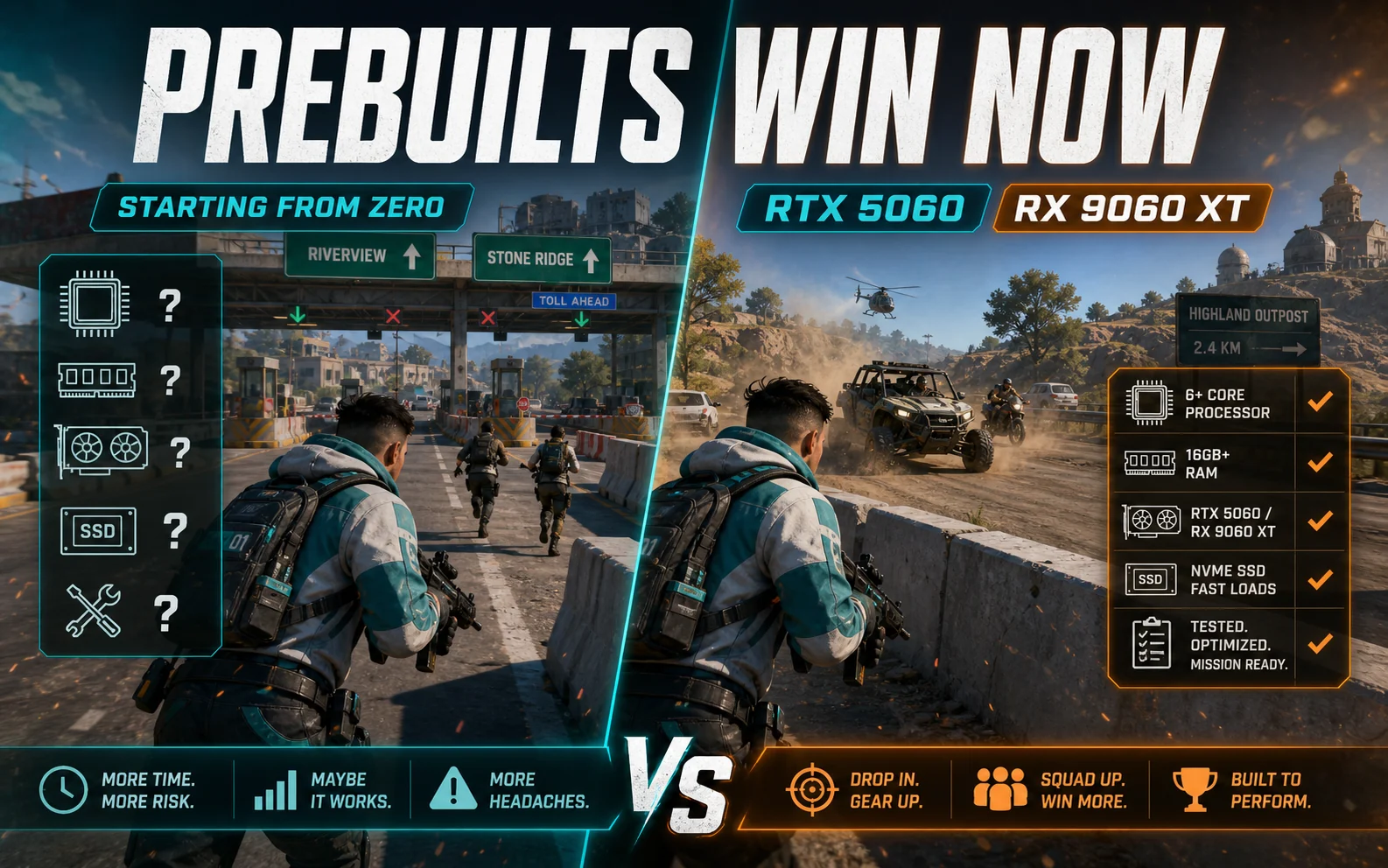
Big system builders dodge most of that. Companies like CyberPowerPC, Skytech, and iBUYPOWER buy memory and storage in bulk on contracts locked in before the spike. They pay yesterday’s prices while you pay today’s. That gap is the entire ballgame now, and it is exactly why prebuilts are beating DIY in 2026 even though it still feels wrong to say out loud.

What the best budget gaming prebuilt under 1000 buys in 2026
This is roughly where the market sits in mid-2026. Treat every number as approximate street pricing, because deals move week to week and the good configs sell through fast.
- CyberPowerPC Gamer Xtreme. A common build runs an Intel Core i5-14400F or Core Ultra 5, an RTX 5060, 16GB of DDR5, and a 1TB NVMe for around $1,000, give or take with config and sales. Buyer ratings are strong. Watch the included PSU and the airflow.
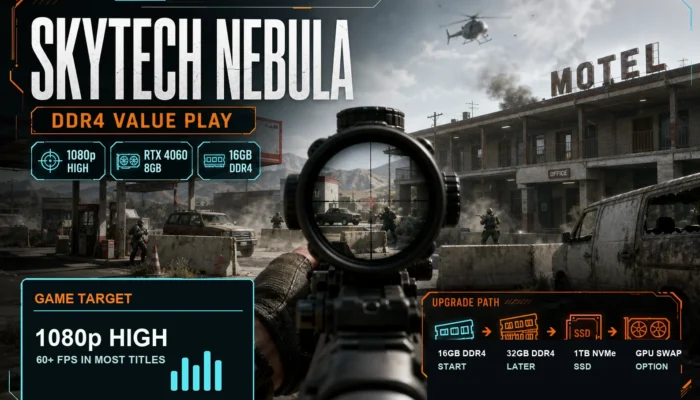
- Skytech Nebula. Often built on a DDR4 platform with 16GB, which is an accidental cost advantage right now since DDR4 spiked far less than DDR5. We have seen RTX 5060 configs near $900, and sale units jump to 32GB without much change in price.
- iBUYPOWER Pro and Trace. Frequently the price floor, around $850 with an RTX 4060 or 5060, an i5-14400F, 16GB, and a 1TB SSD. During sales you sometimes catch 32GB, which in this market is the real win.
One name is missing from that list: a tower built around the RX 9060 XT 16GB. The 16GB Radeon is the value king on the GPU side, roughly 10% faster than the RTX 5060 at 1080p with twice the memory, but it shows up far less often in sub-$1,000 prebuilts. When you do find one near a grand, it is usually the better long-term buy thanks to that VRAM headroom.
The three things to check before you click buy
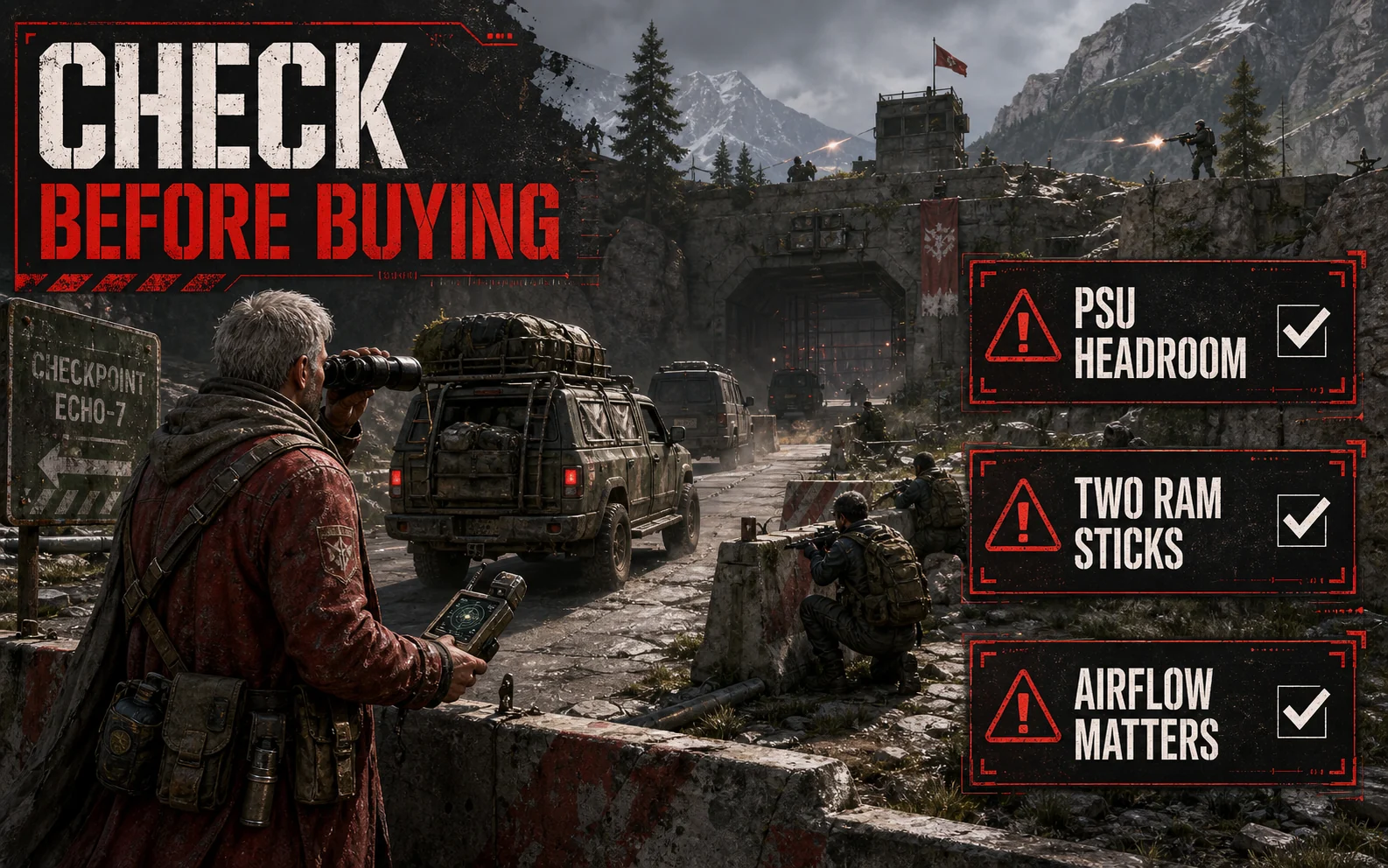
A prebuilt at this price is only a deal if the parts you cannot see on the spec banner are not where they cut corners. Three things decide it.
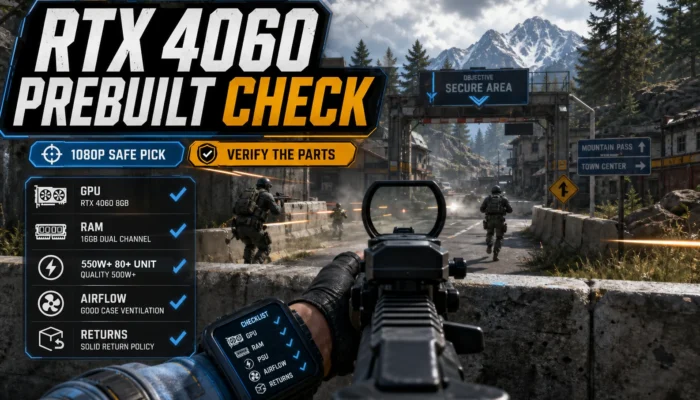
- The power supply. Look for a named brand and real wattage headroom, a 600W to 650W 80+ unit at minimum. A no-name 500W unit feeding an RTX 5060 is the part that fails in year two.
- Dual-channel RAM. 16GB has to be two 8GB sticks, not a single 16GB stick. One stick can quietly cost you 10 to 15% of your frame rate in games. If the listing does not say, ask, or assume the worst.
- Case airflow. You want mesh and intake fans, not a sealed glass front with one exhaust fan pretending to cool a gaming GPU. A thermal-throttled 5060 is a slower 5060.
None of that is exotic. It is the same checklist we walk through in detail on how to spot a good budget gaming prebuilt, and it separates a genuine bargain from a box that looks cheap until you live with it. If you want to see it applied to one specific machine, our CyberPowerPC Gamer Xtreme review runs the whole tower through this gauntlet.
Who should still build instead
Prebuilts winning on price does not mean building is dead. It means the case for DIY narrowed to specific people.
If you already own usable RAM or an SSD, build. Reused memory skips the single most inflated part on the list, and that one carry-over can swing the whole comparison back to DIY. Same goes if you want a dead-end AM4 box on a Ryzen 5 5600 with cheap DDR4, since that platform sidesteps the worst of the DDR5 tax entirely.
Build, too, if the exact parts matter. A specific 16GB GPU, a case you actually like, an AM5 upgrade path that lasts into 2027. But for anyone buying every part new at once, the spreadsheet now leans prebuilt, and the brand fight in our iBUYPOWER vs CyberPowerPC showdown is a good next stop.
What we’d actually buy
For most people spending around $1,000 on an all-new 1080p gaming PC this year, a prebuilt with an RTX 5060 or RX 9060 XT, 16GB of dual-channel RAM, a real power supply, and a mesh case is the move. The DIY savings that justified the extra effort shrank from $150 to $300 down to maybe $100, sometimes to nothing.
Buy the prebuilt if you are starting from zero. Build only if you have RAM or storage to carry over, or you need a specific part the big builders will not box up. That is a strange thing to write after years of telling people to build. The market made us write it anyway.
Before you buy: FAQ
Is a prebuilt really cheaper than building in 2026?
For an all-new build, often yes. Big builders lock RAM and SSD contracts before the price spike, so a sub-1,000 prebuilt can match or beat a DIY build that pays today’s inflated memory and storage prices. The old DIY discount shrank from roughly 150 to 300 dollars down to about 100, and sometimes to nothing.
RTX 5060 or RX 9060 XT for a budget prebuilt?
If you can find an RX 9060 XT 16GB near the same price, it is the stronger long-term pick. It runs about 10 percent faster than the RTX 5060 at 1080p and carries 16GB of memory instead of 8GB. The 5060 is more common in cheap prebuilts and still fine for 1080p, but its 8GB VRAM is the weak spot.
Is 16GB of RAM enough for gaming right now?
Yes, 16GB in dual-channel is the sane budget target for 1080p gaming in 2026. The RAM shortage made 32GB a luxury this year, so paying up for it new is hard to justify on a tight budget. Make sure it is two sticks, not one, or you lose frame rate.
What should I check before buying a budget prebuilt?
Check three things: the power supply brand and wattage, whether the RAM is dual-channel, and case airflow. You want a named 600 to 650 watt unit, two memory sticks rather than one, and a mesh front instead of sealed glass. Skimping on any of those is where cheap prebuilds usually cut corners.
Compare specific budget prebuilts and brands
Once you know the under-$1,000 landscape, these go deeper on the brands and individual systems worth your money:
- iBUYPOWER vs CyberPowerPC — which budget prebuilt brand wins in 2026.
- CyberPowerPC Gamer Xtreme Review — the RTX 5060 prebuilt everyone settles on.
- Skytech Nebula Review — the DDR4 prebuilt that dodged the RAM crisis.
- Is an RTX 4060 Prebuilt Worth It? — what to check before you buy.
- Refurbished & Off-Lease Gaming PCs — when a used Dell or HP beats a new build.