It’s the question in every budget builder’s group chat right now: do I buy a graphics card today, or wait for prices to come back to earth? For most of the last decade the answer was “wait — there’s always a better deal around the corner.” In 2026, that instinct might be costing you money. The corner the market is turning isn’t the one you’re hoping for.
Let’s walk through what’s actually driving GPU prices this year, then land on a straight answer for your situation.
Why cards cost what they cost in 2026
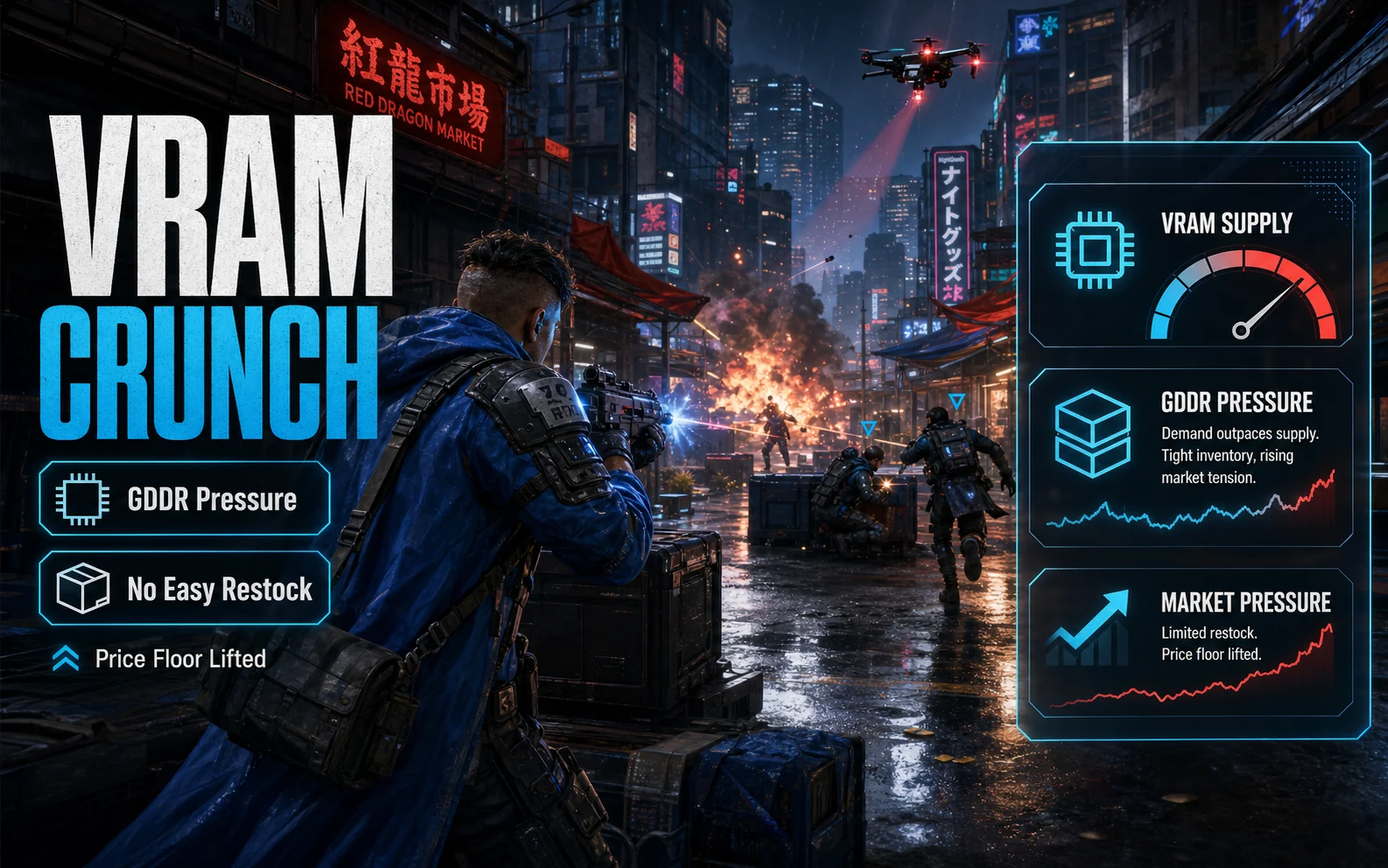
One word: memory. The AI boom turned GDDR and system DRAM into scarce, expensive commodities, and graphics cards are stuffed with the stuff. GDDR prices have climbed steeply year over year, and since VRAM is a big chunk of a card’s bill of materials, the whole price floor lifted. The result is the strangest GPU market in memory: cards routinely selling above the price they launched at, months after release.
It’s not a temporary blip waiting on a restock, either. This is a supply-and-cost problem rooted in an industry-wide scramble for memory, and the people who make the chips have signaled it runs deep.
The relief valves are closed
Normally, high prices get fixed two ways: new cards add supply, or competition forces discounts. Both are jammed shut this year.
- No new NVIDIA gaming GPUs in 2026. NVIDIA confirmed it’s sitting out the year on new GeForce launches, with the next generation reportedly pushed toward 2028. The RTX 50 “Super” refresh that would have added faster, higher-VRAM cards got shelved because it needed the very memory that’s in short supply.
- AMD is raising prices, not cutting them. AMD pushed through Radeon price increases — including a second hike in January — citing rising memory costs, and has signaled more could come.
- Intel is the lone bright spot. The Arc B580 and B570 have held near MSRP and stayed in stock, which is exactly why they’ve become the budget community’s darlings. But Intel alone can’t move the whole market.
With no new supply and no price war, there’s no mechanism pulling prices down in the near term. That’s the part the “just wait” crowd is missing.
So will prices drop later?
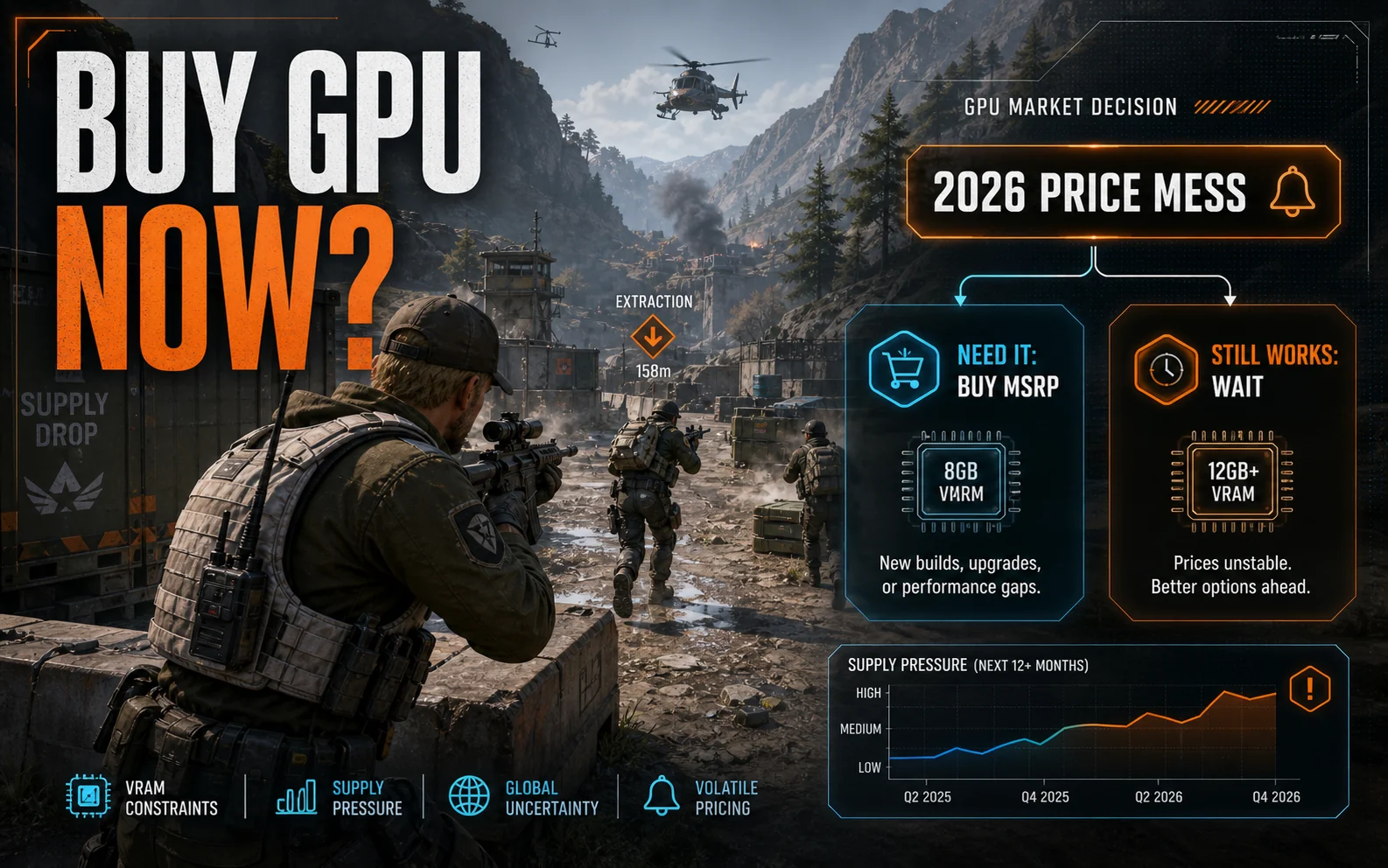
Probably not in 2026, and possibly the opposite. Multiple analysts expect the memory crunch to persist into 2027, and some outlets are warning that hardware could be more expensive by Black Friday, not less. The realistic best case for this year is prices plateauing where they are — broken, but not getting worse week to week. Betting on a real crash means betting against every signal the industry is sending.
We’ve written about how $300 quietly became the new $200 in this category, and 2026 has only hardened that shift. The cheap-GPU era isn’t coming back on a sale timer.
The honest decision framework
Strip away the noise and it comes down to need and timing:
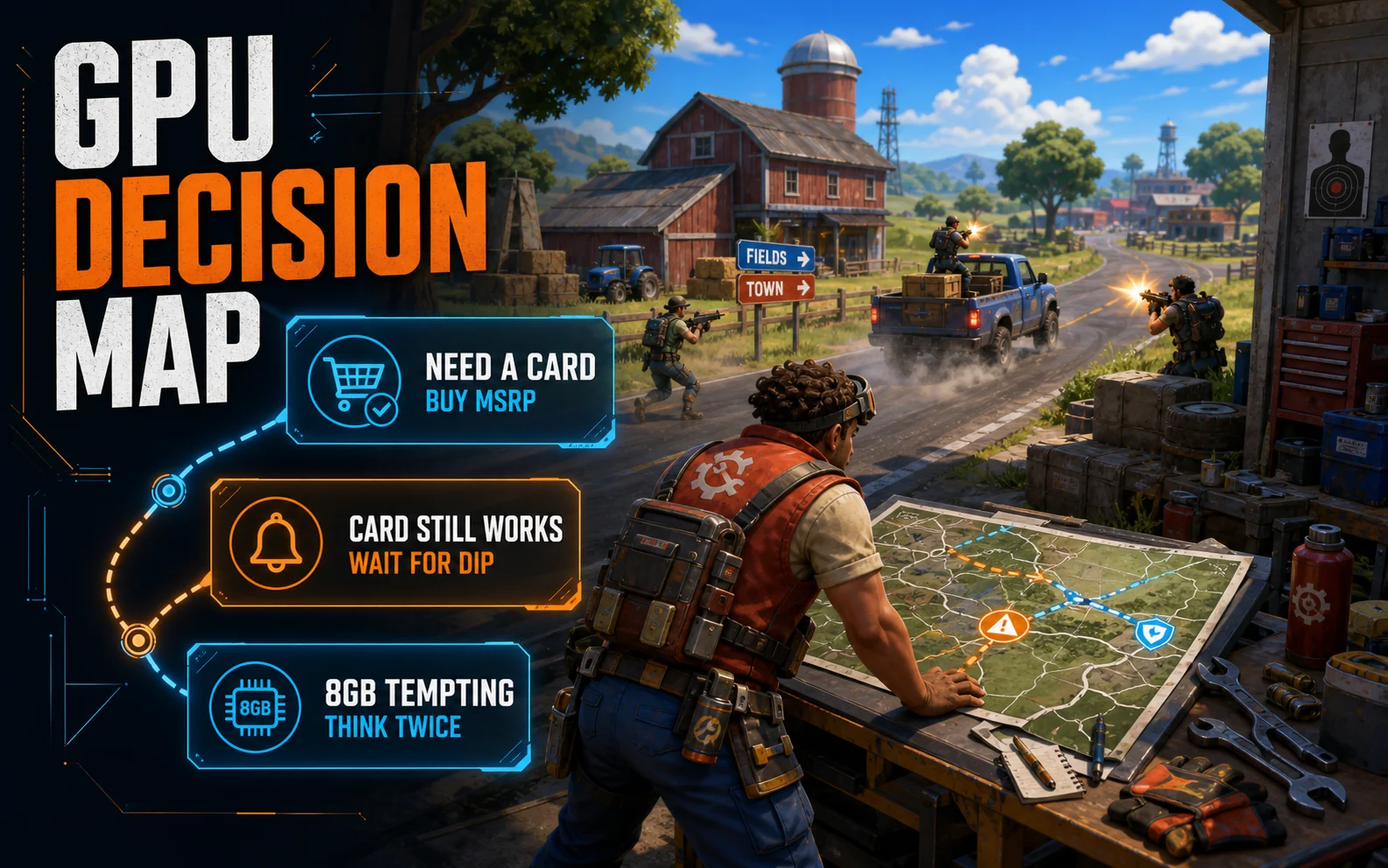
- You need a card now (your current one died, or you’re finishing a build): buy it. Waiting for a dip that the data says isn’t coming just leaves you without a working PC. Target a card at or near MSRP — the Arc B580 around $250, the 16GB RX 9060 XT near $349 if you can catch it — and don’t agonize.
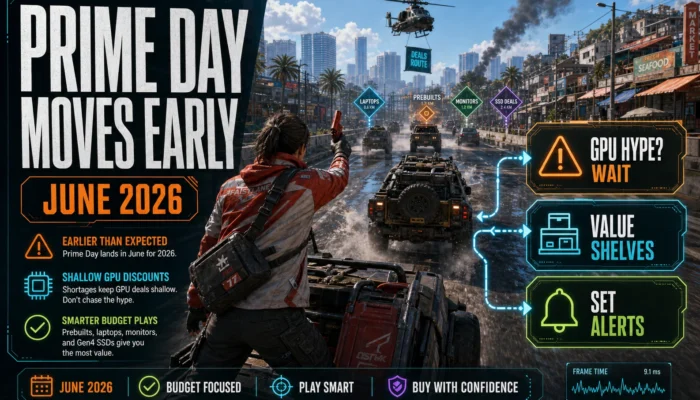
- You want an upgrade but your current card still works: you have the luxury of patience, so use it surgically. Set price alerts, watch the June Prime Day and Black Friday windows for a card touching MSRP, and pounce on that — not on a mythical 40%-off event.
- You’re tempted by an 8GB card to save money: think twice. In 2026 the 8GB buffer is the thing that breaks first, and a slightly pricier 12GB or 16GB card will age far better. Don’t let the price pressure talk you into a card you’ll resent in a year.
What not to do
Don’t panic-buy at a clearly inflated price out of FOMO — a card marked up 30% over MSRP is not “buying before it gets worse,” it’s overpaying today. And don’t sink your savings into a dying-platform deal just because the sticker is low. The move is to buy at MSRP when you genuinely need it, and to wait specifically for an MSRP dip when you don’t. Anything else is gambling against a market that’s stacked against you.
The short answers
Should I buy a GPU now or wait in 2026?
If you need one, buy it now at or near MSRP — prices aren’t expected to fall meaningfully this year and could rise. If your current card still works, wait patiently for a sale that brings a card to its launch price rather than holding out for a crash that the data doesn’t support.
Why are GPUs so expensive in 2026?
An AI-driven memory shortage made the GDDR VRAM on graphics cards scarce and expensive, lifting prices across the board. Many cards now sell above their launch MSRP, and there’s no new supply or price competition pulling them back down.
Will GPU prices drop by the end of 2026?
Unlikely. Analysts expect the memory crunch to last into 2027, and some warn prices could be higher by late 2026. The realistic best case is prices holding steady rather than dropping.
What’s the safest budget GPU to buy right now?
The Intel Arc B580 around $250 is the standout — it has stayed near MSRP and in stock, with 12GB of VRAM. The 16GB RX 9060 XT is the next step up if you can find it near its $349 launch price.
So, buy or bail?
If you need a graphics card, buy one — at MSRP, today, without waiting for a rescue that isn’t on the schedule. If you don’t, keep your current card running and stalk a specific MSRP dip during Prime Day or Black Friday rather than a fantasy fire sale. The 2026 GPU market is genuinely bad, but the worst move is to freeze, refuse to buy at fair prices, and end up paying more later. Patience only pays when there’s a payoff coming, and this year, the math says there mostly isn’t.