If you’ve priced a RAM kit lately, you already know something has gone badly wrong. Memory and storage are the two parts of a 2026 gaming build that have spiraled hardest — DDR5 kits roughly tripled over the past year, and NVMe SSDs followed as the same shortage spread from DRAM to NAND flash. A 32GB DDR5 kit that cost about $90 in early 2025 touched $500 at the spring peak. This is the worst memory market in living memory, and panic-buying or freezing up are both ways to lose money.
You can’t fix the market, but you can shop it smart. Here’s how to get the RAM and storage your build needs without overpaying in the 2026 crunch.
First, understand what you’re up against
The cause is AI. Hyperscalers building data centers have locked up enormous DRAM and NAND supply on long contracts, leaving the consumer market scrambling for what’s left. Prices pulled back maybe 20% from the spring peak, which sounds like relief until you remember they’d quadrupled first. Analysts expect the squeeze to last into 2027 at the earliest. So the honest baseline is: this isn’t a dip you can wait out in a month, and prices could climb again before they truly normalize.
That reality shapes every tactic below. The goal isn’t to find 2024 prices — they’re gone for now. It’s to avoid the avoidable overpayment.
Buy what you need, not what the forums brag about
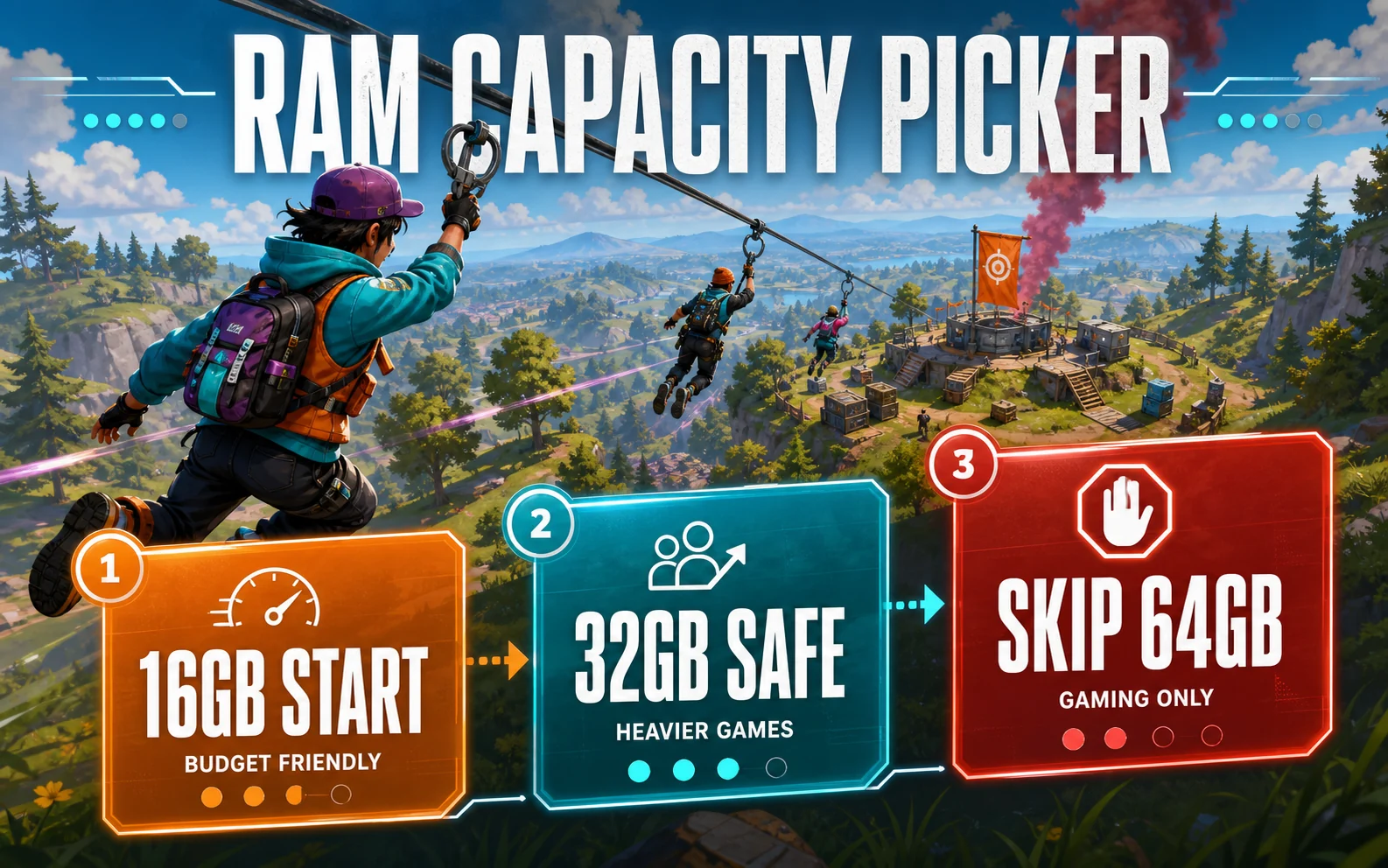
In a normal year, “just get 32GB, it’s cheap” is fine advice. In 2026 it can add $100+ to your build for capacity you may not use yet. Right-size instead:
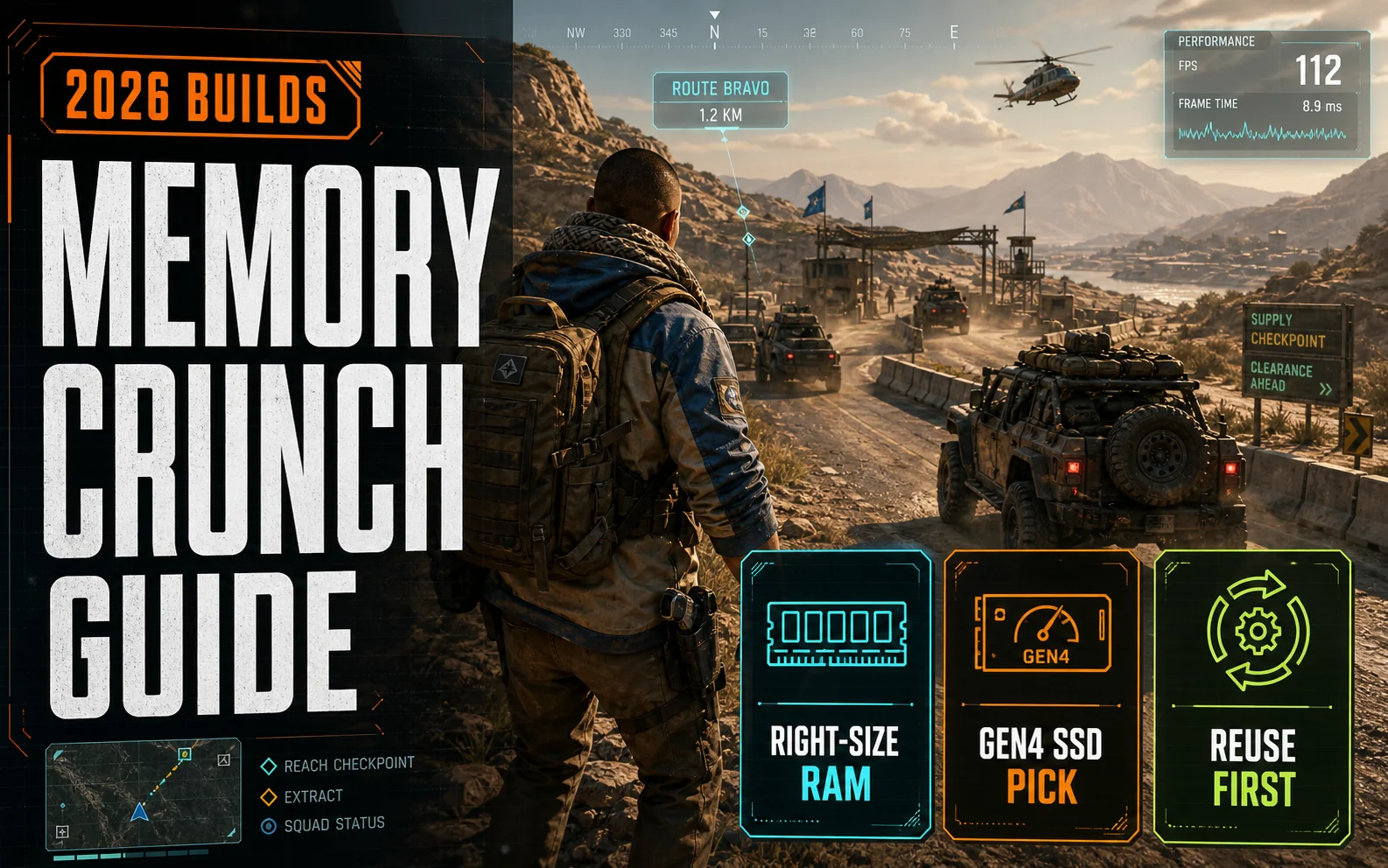
- 16GB still covers every competitive game and most current AAA titles at sensible settings. If your budget is tight, start here and add a second kit later when prices ease. Our RAM guide for 1080p gaming shows exactly where 16GB holds and where it doesn’t.
- 32GB is the safer bet for 2026’s heavier releases (a few games genuinely want it now), but only buy it if you’ll feel the benefit. Don’t pay the premium for headroom you won’t touch for two years.
- Skip 64GB entirely unless you’re doing serious creative work. For gaming it’s money set on fire at current prices.
Consider DDR4 — the shortage made it the value play
DDR4 went up too, but it’s still dramatically cheaper than DDR5, and it runs on cheaper motherboards. If you’re choosing a platform from scratch, an AM4 or DDR4-capable Intel build can save $150–200 across memory and board combined, for gaming performance within a few percent of DDR5. We broke down the full budget-build math separately, but for memory specifically, DDR4 is the shortage-era loophole worth knowing about.
The single best move: reuse what you own
Nothing beats free. If you have a working DDR4 kit, an SSD, or even a decent older drive sitting in a retired machine, carrying it into your new build sidesteps the most inflated parts entirely. A reused 16GB kit effectively knocks $70–90 off your budget at today’s prices; reused storage saves similar. Before you buy a single new stick, raid your old hardware. This is the one tactic that turns the shortage from a problem into a non-issue.
SSDs: buy Gen4, not Gen5, and watch for real dips
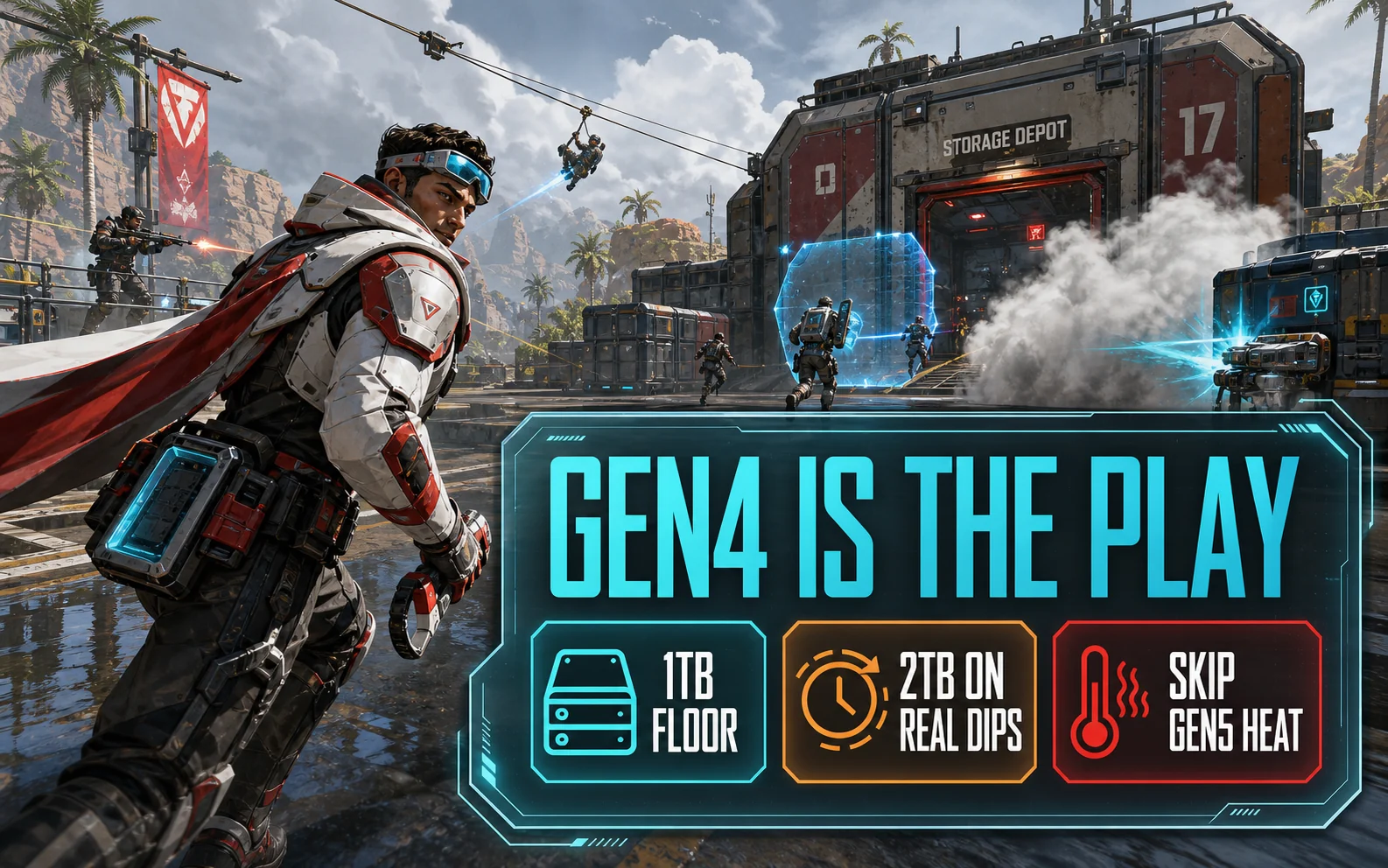
The storage rules shifted too. PCIe Gen5 drives carry a price premium that makes zero sense for gaming — they’re not meaningfully faster in games than Gen4, and they cost more and run hotter. A solid 1TB Gen4 NVMe is the budget-correct choice, with 2TB worth it if a genuine sale appears. Don’t drop below 1TB in 2026; modern game installs of 100–150GB will fill a 500GB drive embarrassingly fast. If Prime Day or a Black Friday deal puts a 2TB Gen4 drive at a real discount, that’s the moment to stock up, because storage prices aren’t trending down on their own.
Timing tactics that actually help
- Don’t buy at the visible peak. Prices move daily right now. Use a price tracker, note the recent low for a kit, and don’t pay well above it in a panic.
- Don’t wait for a crash that isn’t coming. If you need the build now, buy at a fair recent price. Holding out for 2024 numbers means holding out indefinitely.
- Pounce on genuine sale dips. The cheap kits sell out in seconds during the spikes, so when a fair price appears, move quickly rather than deliberating for a week.
- Be cautious with used RAM. Memory rarely fails, so used DDR4 can be a fine deal — but buy from sellers with returns, and test it with a memory checker before you trust it. The same buyer-beware mindset from our used GPU guide applies.
Quick answers
Why is RAM so expensive in 2026?
An AI-driven shortage. Data center demand locked up huge amounts of DRAM and NAND flash supply, sending DDR5 prices up roughly threefold over a year and dragging SSD prices up with them. The squeeze is expected to last into 2027.
Should I buy RAM now or wait for prices to drop?
If you need it for a build now, buy at a fair recent price rather than waiting — a real crash isn’t expected this year, and prices could rise again. If you can wait, watch a price tracker and buy on a genuine dip, but don’t hold out for pre-shortage prices.
Is 16GB or 32GB of RAM right for a 2026 budget build?
16GB still handles competitive games and most current AAA titles, and it’s the budget-friendly start; you can add more later. 32GB is safer for 2026’s heaviest games but only worth the premium if you’ll actually use it.
Should I buy a Gen4 or Gen5 SSD for gaming?
Gen4. PCIe Gen5 drives cost more and run hotter without being meaningfully faster in games. A 1TB Gen4 NVMe is the budget-correct pick, with 2TB worth grabbing on a real sale.
Play it this way
Right-size your capacity, lean on DDR4 if you’re picking a platform, raid your old machine for anything reusable, and stick to Gen4 storage. Then buy at a fair recent price instead of either panicking at the peak or waiting for a rescue that’s a year or more away. The 2026 memory crunch is brutal and largely out of your hands — but smart shopping still trims a meaningful chunk off the part of your build that hurts the most.