Game-specific build guides have to separate Fortnite Performance Mode, Cyberpunk 2077 high settings, and Call of Duty install-size pressure before any parts list appears. For this rewrite, I checked Steam’s March 2026 hardware survey, Epic’s Fortnite requirements, Epic’s Fortnite Performance Mode article, CD Projekt Red’s Cyberpunk 2077 requirements, and Activision’s March 2026 Black Ops 7 requirements. Prices and availability checked April 26, 2026.
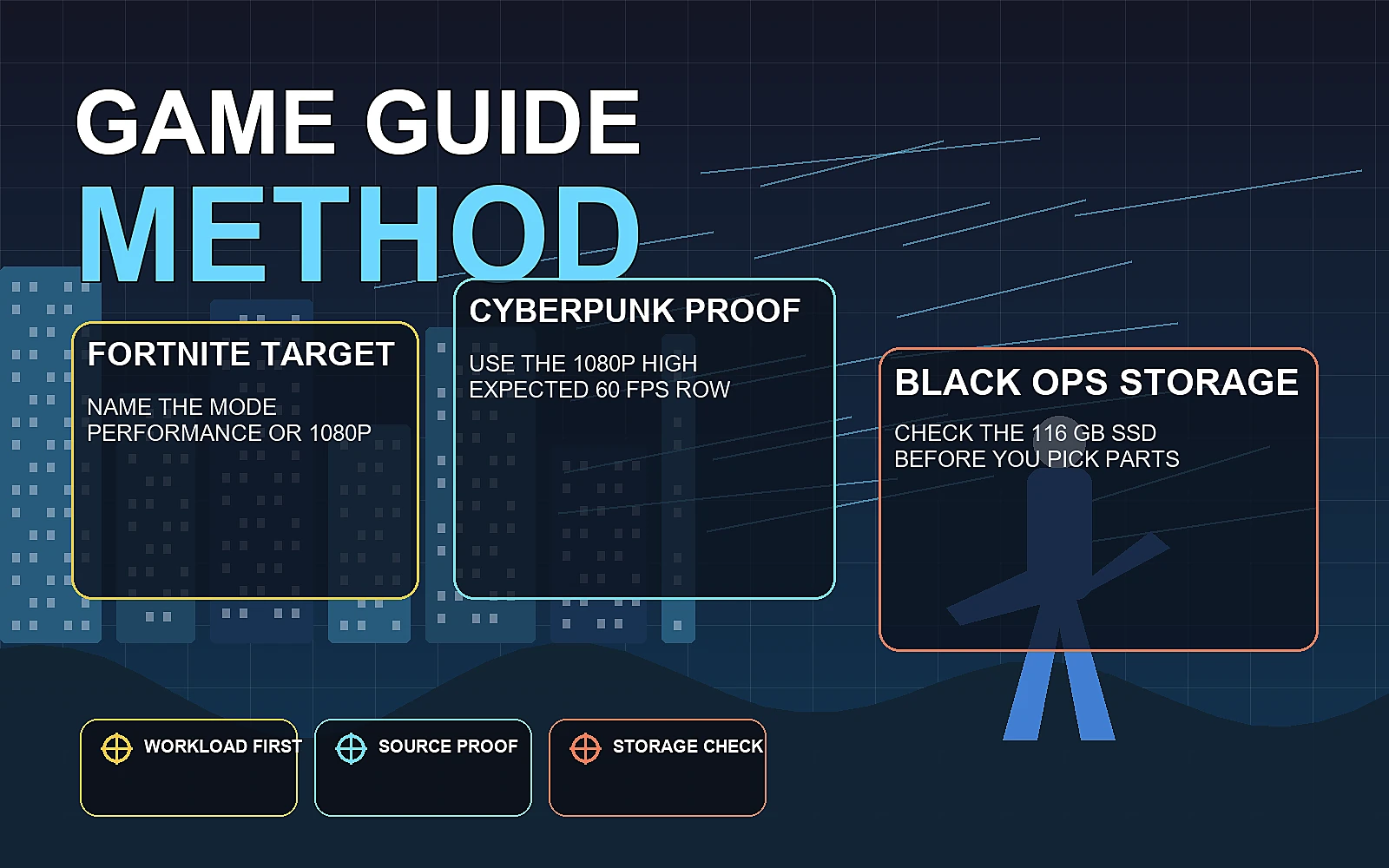
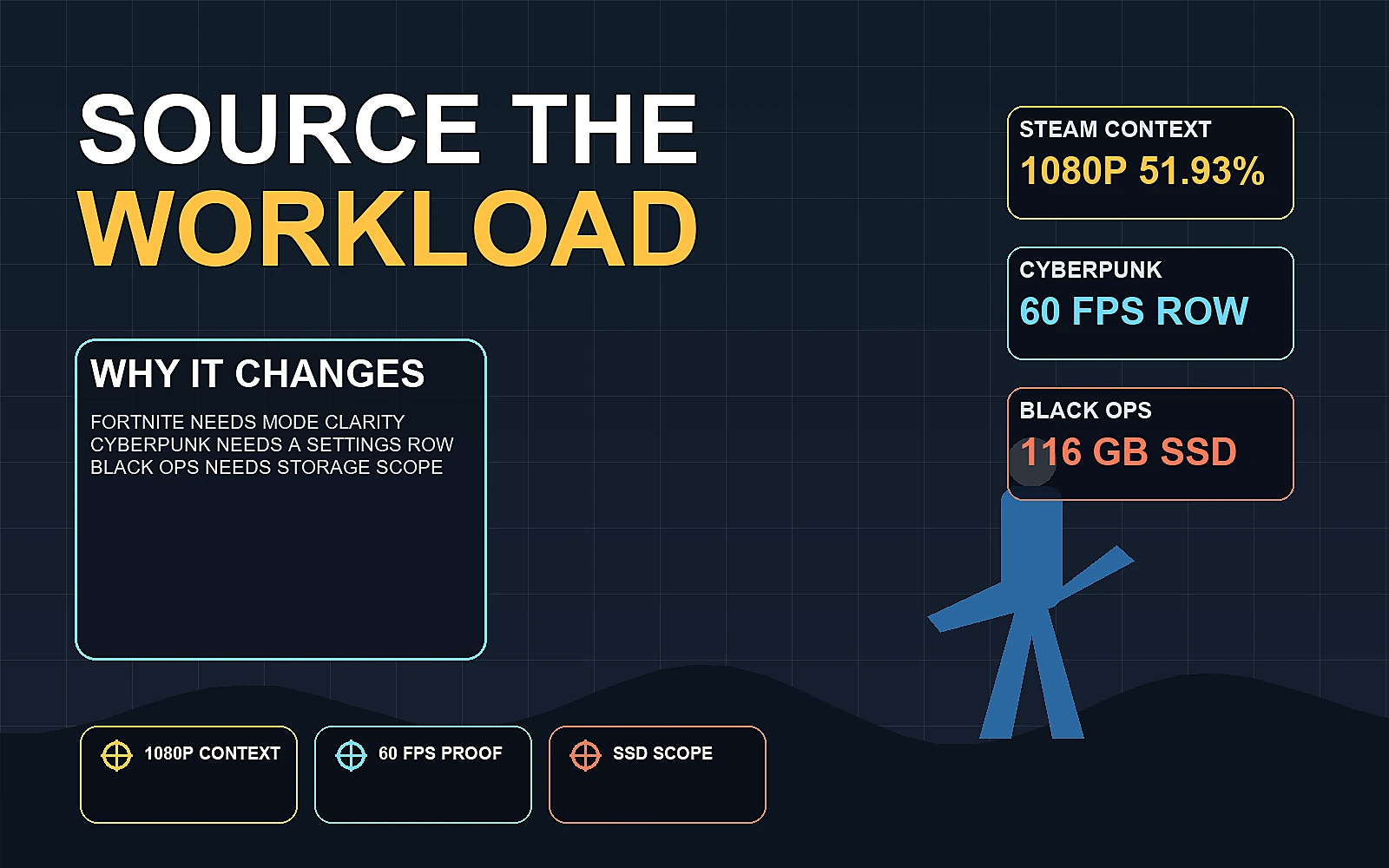
Steam’s March 2026 survey puts 1920 x 1080 at 51.93%, so this methodology keeps budget examples tied to a mainstream display target. Activision’s March 11, 2026 Black Ops 7 page lists a 116 GB SSD launch footprint, which makes storage scope part of that game’s guide. According to CD Projekt Red’s Cyberpunk 2077 page fetched April 26, 2026, its table names a 1080p high expected 60 FPS row, so a heavy single-player guide needs source-backed settings language. Epic’s Fortnite pages split the target again by mode and preset.
Fortnite Performance Mode target before parts.
Epic’s current Fortnite support page separates minimum, recommended, and Epic Quality Preset requirements, so a CheapFPS Fortnite article has to say whether it is talking about low-end survival, a normal 1080p setup, or a higher visual preset. A Fortnite parts table without that target leaves the reader guessing whether the build is chasing Performance Mode, a normal 1080p preset, or Epic’s higher visual preset.
Epic’s Performance Mode article gives the proof format CheapFPS wants, even though the article is older. According to Epic’s April 30, 2021 Fortnite Performance Mode article, its 720p Squads-match example moved one low-end laptop from 24 FPS on standard low scalability to 61 FPS with Performance Mode. According to the same Epic article and test scope, a second low-end laptop moved from 18 FPS to 45 FPS at 720p. A Fortnite guide can cite those rows as older Epic examples, not as a fresh 2026 desktop test.
A Fortnite article needs a named workload before any component argument. Performance Mode belongs in the Fortnite section because Epic’s 2021 article ties that mode to 720p Squads-match examples. Cyberpunk 2077 belongs in a different source lane because CD Projekt Red publishes a separate 1080p high target for that game. A prebuilt search needs direct listing proof before the article talks about the shipped configuration.
Different games demand different proof.
Steam’s March 2026 survey keeps the examples grounded. According to Steam’s March 2026 hardware survey, 1920 x 1080 is the largest primary display resolution share at 51.93%. That 51.93% Steam row explains why a 1080p Fortnite page and a 1080p Cyberpunk page can share a resolution while still needing different source proof. Steam’s same March 2026 survey reports 16 GB system memory at 40.97%, but that number belongs in source context rather than in a repeated parts slogan.
Cyberpunk 2077 points the article in a heavier direction than Fortnite. According to CD Projekt Red’s support page, fetched on April 26, 2026 and marked updated three months earlier, the Cyberpunk 2077 Update 2.0 and Phantom Liberty table lists a 1080p high expected 60 FPS row. That row names RTX 2060 Super, Radeon RX 5700 XT, and Arc A770-class graphics. CD Projekt Red’s same requirement table lists 70 GB SSD space. A Cyberpunk guide has to treat visual target and storage footprint as part of the workload, not as decoration after the build table.
Call of Duty adds another kind of pressure. According to Activision’s Black Ops 7 PC requirement article dated March 11, 2026, the recommended row targets 60 FPS in most situations with options set to high. The same official row lists 116 GB SSD space at launch. The 116 GB launch footprint means a Black Ops guide needs an install-size check before it treats an older boot drive as enough room for a live-service shooter.
Fortnite asks for mode clarity. Cyberpunk asks for a heavier visual target and a publisher requirement row. Black Ops asks for current storage scope. Fortnite, Cyberpunk 2077, and Black Ops 7 each need a workload line tied to the source that supplied the setting or storage claim.
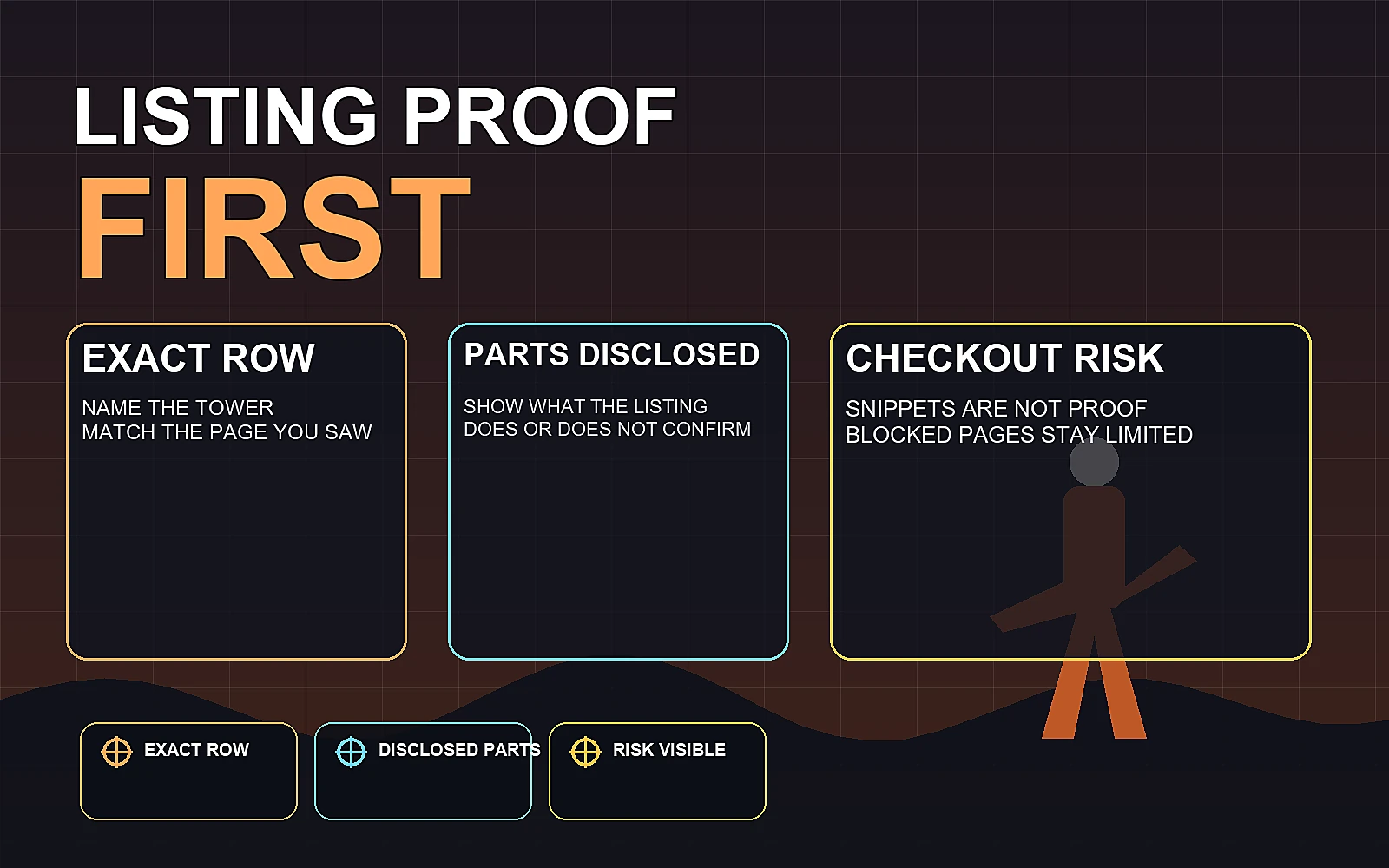
Prebuilt proof has to name the exact row.
A Fortnite prebuilt row on Amazon or Newegg is only evidence after the direct page loads, because search snippets cannot confirm seller terms or shipped part details. CheapFPS can say that a fetched product page did not disclose a power supply model. The article can say that a Walmart RTX 4060 tower page did not confirm whether the shipped memory uses one stick or two sticks. It cannot turn an unnamed tower into a broad complaint about hidden parts unless the article shows the exact listing row or clearly says the detail was not reliably confirmed.
A blocked Amazon page, a Newegg human-check page, or a search-index snippet can be used as limited evidence that a listing may exist. Blocked pages cannot prove final seller terms for a Fortnite tower. Search snippets cannot confirm the shipped storage device for a Call of Duty tower.
Fortnite titles can hide the checkout risk on an RTX 4060 prebuilt row. Call of Duty towers may need more local storage than the headline suggests. The published guide should make that uncertainty visible instead of using a game name to make the listing feel settled.
Fortnite, Cyberpunk, and Black Ops checklist.
The Fortnite pass names Performance Mode, 1080p, or Epic Quality Preset before it argues for a build table. Cyberpunk coverage should attach CD Projekt Red’s 1080p high row to the settings claim. Black Ops coverage should attach Activision’s March 2026 requirement row to the storage claim.
Prebuilt coverage starts only when the page names buyable hardware. If an RTX 4060 row appears in the article, the draft must show what the listing disclosed before checkout.
A Fortnite paragraph should move from mode target to settings consequence. Black Ops paragraphs should move from install footprint to storage consequence. Prebuilt paragraphs should move from visible product data to the merchant limitation.
What was reviewed for this rewrite.
This rewrite used Steam’s March 2026 Hardware & Software Survey for mainstream PC context, Epic’s Fortnite system-requirements support page for publisher requirements, and Epic’s April 30, 2021 Performance Mode article for a sourced example with workload, setting, metric, and date. It also used CD Projekt Red’s Cyberpunk 2077 requirements page and Activision’s March 11, 2026 Black Ops 7 requirements page for heavier-game and current live-service examples.
No Amazon, Newegg, Best Buy, or Walmart price is printed in this article. The update trigger is a material change to Epic’s Fortnite requirements, CD Projekt Red’s Cyberpunk table, Activision’s Black Ops requirement page, or the CheapFPS game-guide template.